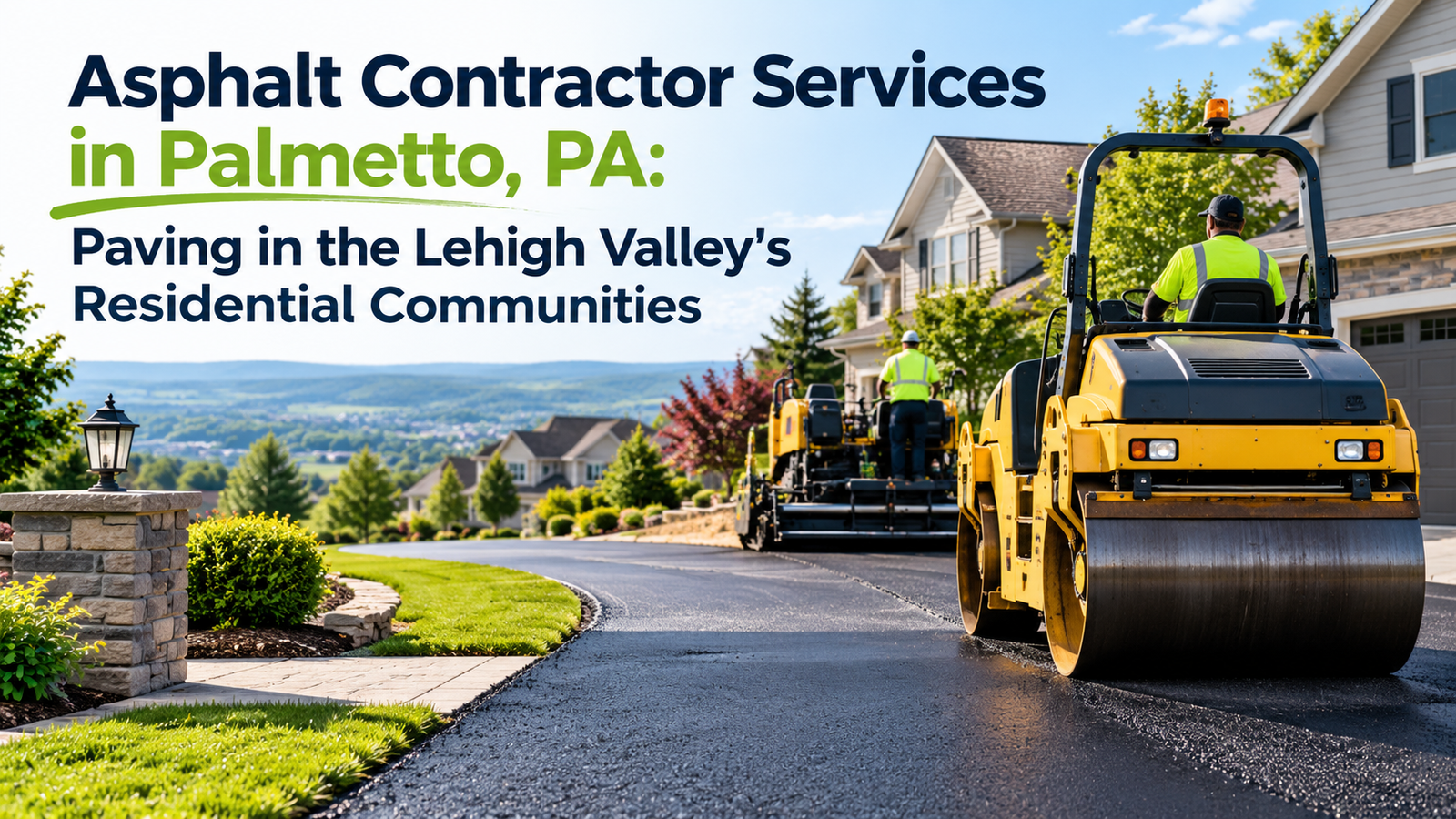
Palmetto is a residential area in the Lehigh Valley region of Pennsylvania part of the broader Allentown-Bethlehem-Easton metropolitan area that spans the Northampton and Lehigh County border. Like much of the Lehigh Valley’s established residential fabric, Palmetto includes a mix of housing vintages: homes from the mid-20th century sitting alongside more recent construction, with driveways and paved surfaces that span a range of ages and conditions. Pennsylvania’s demanding climate with more than 100 freeze-thaw cycles per year and significant deicing salt use means that asphalt in this region ages differently and requires more active maintenance than Asphalt Contractor palmetto in warmer states.
Pennsylvania’s Freeze-Thaw Climate and What It Does to Asphalt
The Lehigh Valley’s climate sits at a latitude and elevation that produces some of the most active freeze-thaw cycling in the Mid-Atlantic region. Allentown and Northampton County average more than 100 freeze-thaw cycles per year days when overnight temperatures drop below 32°F and daytime temperatures climb above it. Each of these cycles is an opportunity for water that has infiltrated asphalt cracks or the pavement base to freeze, expand by roughly 9 percent, exert upward pressure on the pavement surface, and then contract as it melts. The cumulative effect of 100 or more such cycles in a single winter is significant.
Pennsylvania’s frost penetration depth adds another dimension: in the Lehigh Valley, the ground regularly freezes to depths of 24 to 30 inches in a typical winter. When frost penetrates to the pavement base and subgrade, frost-susceptible fine-grained soils can form ice lenses that heave the pavement upward. When the frost melts in spring, the heaved sections settle, sometimes unevenly, leaving a pavement surface that is rough, cracked, and potentially damaged at the base.
Deicing salt is applied liberally on Palmetto’s streets and driveways through the winter season sodium chloride, calcium chloride, and magnesium chloride all see use, each with different performance characteristics at different temperatures. These chloride salts penetrate asphalt through surface cracks and pores, where they contribute to the separation of asphalt binder from aggregate particles (a process called stripping) and accelerate the freeze-thaw damage cycle by lowering the freezing point of water in the pavement pores and increasing the number of effective freeze-thaw cycles per winter.
Asphalt Paving Applications in Palmetto
Residential driveway paving new installation, replacement of worn-out surfaces, and overlay resurfacing is the primary asphalt paving application for Palmetto properties. Driveways in this part of the Lehigh Valley are typically paved with asphalt rather than concrete for several reasons: asphalt is more flexible and better able to accommodate the frost heave and settlement that Pennsylvania’s climate produces; asphalt is easier to repair and patch as localized distress occurs; and asphalt can be resurfaced without full removal, extending its service life cost-effectively.
Small parking areas associated with residential properties detached garages with adjacent parking pads, multi-car driveways, turnaround areas are also common asphalt applications in this neighborhood. These areas see higher traffic concentration than standard driveways and benefit from slightly heavier pavement sections, particularly in areas where delivery and service vehicles make regular visits.
Commercial properties in Palmetto’s mixed-use areas small retail, service businesses, and professional offices require commercial-grade asphalt paving for their parking lots and access drives. Commercial paving in Pennsylvania must meet ADA accessibility requirements for accessible parking stalls, access aisles, and accessible routes, and must comply with PennDOT standards where the development connects to state-maintained roads.
Base Preparation in Northampton County Soils
The soils in the Palmetto area and broader Northampton County reflect the Lehigh Valley’s complex geology. The valley itself sits on limestone and shale bedrock of the Triassic and Paleozoic periods, overlaid by glacial till, residual soils, and alluvial deposits in the low-lying areas near the Lehigh and Delaware Rivers. The specific soil character of any given site depends on its position in this landscape.
Upland areas in the Lehigh Valley typically have residual soils derived from limestone weathering soils that tend to be clayey to silty loam with variable drainage. These soils can be frost-susceptible and lose bearing capacity when saturated, which is relevant for pavement base design in Pennsylvania’s wet spring season. Areas with significant clay content require attention to drainage and subgrade preparation similar to what is needed in other clay-dominated regions.
Glacial till, common in areas that were covered by Pleistocene glaciers, is a mixed deposit containing everything from fine silt and clay to gravel and boulders. Till can be an excellent subgrade material when well-drained and compacted, or it can be problematic when it includes a significant fine fraction that is frost-susceptible. Geotechnical assessment of the subgrade before major paving projects in Northampton County is the appropriate approach for commercial applications; for residential driveways, proofrolling the subgrade after preparation provides field verification of its condition.
Aggregate base course in Pennsylvania paving projects is typically produced from local limestone quarries, which are abundant in the Lehigh Valley. PennDOT-approved aggregate base materials No. 2A dense-graded aggregate or No. 2RC recycled concrete aggregate are standard choices for commercial paving. Residential driveways use similar materials, often compacted to 4 to 6 inches for standard applications.
Sealcoating and Maintenance Practices for the Lehigh Valley Climate
In Palmetto and the broader Lehigh Valley, sealcoating every 2 to 3 years is the appropriate maintenance interval more frequent than the 3 to 5-year cycle common in warmer, less salt-exposed climates. The combination of UV exposure, freeze-thaw cycling, deicing salt penetration, and heavy rainfall depletes the protective coating faster than in gentler climates. The timing of sealcoating in Pennsylvania is critical: the product must be applied when temperatures are above 50°F and must cure completely before freezing temperatures arrive.
The optimal sealcoating window in the Lehigh Valley is late summer through early October August through the first two weeks of October in most years. This timing provides warm curing conditions and ensures the sealcoat fully hardens before the first frost. Sealcoat applied in late October or November in Pennsylvania risks freezing before it cures, which causes peeling, flaking, and poor adhesion.
Crack sealing before winter is the most important individual maintenance step for asphalt in this climate. Hot-pour rubberized crack sealant applied in fall September and October is ideal seals the cracks that have formed during the summer and prevents winter water infiltration and freeze-thaw damage from expanding them. In Pennsylvania’s climate, crack sealing is a particularly high-return maintenance investment because the consequences of unsealed cracks through a freeze-thaw winter are severe.
Resurfacing and Rehabilitation for Palmetto Properties
Asphalt in the Lehigh Valley typically reaches the resurfacing decision point at 12 to 18 years earlier than in warmer climates because of the more aggressive deterioration from freeze-thaw and salt. At this age, the surface shows widespread cracking, oxidation, and surface raveling, but the base course may still be structurally sound. Resurfacing a 1.5 to 2-inch overlay on the existing surface restores the wearing surface and extends the pavement’s life by 10 to 15 years.
Pre-resurfacing preparation in Pennsylvania must address the effects of frost damage and salt exposure specifically. Areas with extensive reflective cracking from prior winter damage may need crack filling before overlay. Areas with frost heave distortion may need leveling courses before a uniform overlay thickness can be achieved. The elevation management considerations keeping the overlay’s added thickness from creating elevation conflicts at curbs, drains, and building thresholds apply here as they do everywhere.
Frequently Asked Questions: Asphalt Contractor in Palmetto, PA
How does Pennsylvania’s freeze-thaw cycle damage asphalt driveways?
Pennsylvania’s 100+ freeze-thaw cycles per year damage asphalt through two mechanisms. First, water that infiltrates surface cracks freezes, expands by about 9 percent, and widens the crack from within. Repeated over a winter season, this progressive cracking destroys the surface integrity. Second, frost penetrating to the pavement base and subgrade can cause frost heave the upward displacement of pavement sections as ice lenses form in frost-susceptible soils. Both mechanisms are managed by crack sealing in fall and by using non-frost-susceptible base materials.
How often should asphalt be sealed in the Lehigh Valley?
Every 2 to 3 years is the appropriate sealcoating interval for the Lehigh Valley climate. The combination of freeze-thaw cycling, deicing salt penetration, and UV exposure depletes protective sealcoating faster than in warmer climates. The timing matters as much as the frequency: sealcoating should be applied in late summer through early October so it cures fully before freezing temperatures arrive. Sealcoat applied too close to winter may not cure before freezing, causing it to peel.
Is asphalt or concrete better for driveways in Pennsylvania?
Both materials are used successfully in Pennsylvania, and each has advantages. Asphalt is more flexible, accommodates frost heave and settlement better than rigid concrete, and is easier and less expensive to repair or resurface when damage occurs. Concrete is harder and more resistant to fuel spills and deicing salt surface damage, but it is more likely to crack under frost heave and is more expensive to repair. In Pennsylvania’s climate, asphalt’s flexibility is a significant advantage in residential applications.
What is the frost depth in the Lehigh Valley and does it affect paving design?
The design frost depth in the Allentown and Northampton County area is approximately 24 to 30 inches. Frost penetration to this depth can affect fine-grained, frost-susceptible soils in the base and subgrade. Pavement base designs that use well-draining, non-frost-susceptible crushed stone aggregate and adequate base thickness reduce the risk of frost heave. PennDOT’s pavement design standards for public roads account for frost depth; residential driveways benefit from the same principles applied at an appropriate scale.